Back to Selected Work

Commerce Case Study

NimizGadgets Commerce Platform

A commerce system built to improve checkout confidence, customer trust, payment verification, and day-to-day order operations in one working build.

ReactNode.jsExpressMongoDBPaystackAdmin Ops
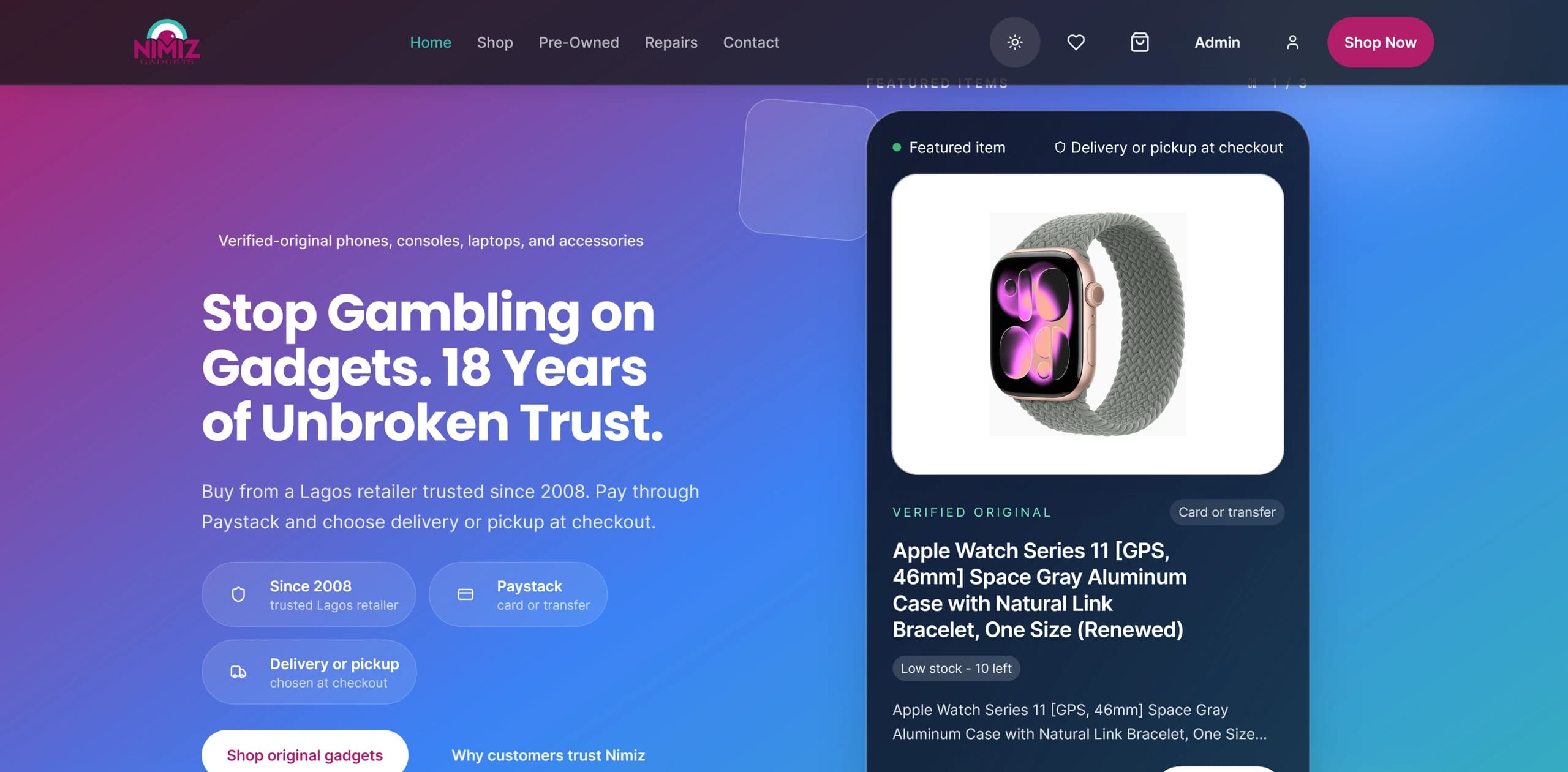
NimizGadgets storefront screenshot

Workflow Shift

What changes when the storefront is built as a system

The strongest proof is not only the interface. It is what becomes easier to trust, easier to run, and easier to support once payment and order flow start moving.

Customer handoff

Before

Buyers need more reassurance between browsing, payment, and post-purchase follow-up.

After

Product browsing, checkout, verification, customer accounts, and order updates move through one clearer path.

Ops visibility

Before

Store operations rely on more scattered updates and slower order-handling routines.

After

Operators can track catalog changes, order activity, and follow-up work inside one safer admin flow.

Post-purchase clarity

Before

Teams absorb more basic support questions because post-purchase visibility is weaker.

After

Email flows, document templates, and account views reduce the support burden after checkout starts.

What Shipped

The build covers more than a storefront shell

  • React storefront with customer and admin routes.
  • Node.js and Express API with auth, rate limiting, and protected payment handling.
  • MongoDB persistence for products, orders, customer data, and inventory state.
  • Paystack handoff, verified webhooks, refund and cancellation restoration logic, and admin-side document workflows.

Decision Signals

Why this project matters as proof

Why checkout architecture matters

A storefront that looks polished but fails at payment verification or post-purchase visibility loses trust at the exact moment the business needs confidence.

Why ops coverage matters

Inventory-safe validation, restoration paths, and controlled order handling protect the business from silent operational drift.

Why follow-through matters

The invoice and handoff layer proves the work does not stop at the public interface when delivery operations need structure too.

Client signal

"The storefront felt easier to trust immediately, and the team had a cleaner handoff once payment started coming in."

Storefront, checkout, and admin workflow

Operations lead, retail electronics store

Name withheld, ops role confirmed, 2025

Visual Proof

NimizGadgets storefront interface

The live screen makes merchandising hierarchy, trust cues, and a calmer first path into checkout visible immediately.

Operational Artifact

NimizGadgets invoice and handoff preview

The invoice and handoff layer shows that the system supports the business after payment begins, not only before the sale.

System Layers

The support layers behind the visible storefront

The screen matters, but the real proof sits in the checkout, admin, inventory, and post-purchase layers that keep the store reliable once transactions start moving.

Storefront clarity

The storefront is structured to make merchandising, trust cues, and the path into checkout easier to understand quickly.

Verified checkout

Paystack handoff and payment verification are part of the system itself, not a fragile layer added after the interface is designed.

Order operations

Catalog updates, order handling, and inventory visibility are part of the admin-side operating model, not hidden manual work.

Post-purchase follow-through

Invoices, receipts, and post-purchase files extend the build into the delivery workflow after payment begins.

Next Step

Need a commerce build that holds up operationally?

Start with the brief and describe the product catalog, checkout flow, payment risk, or order-handling gap. The reply will point to the clearest next step.